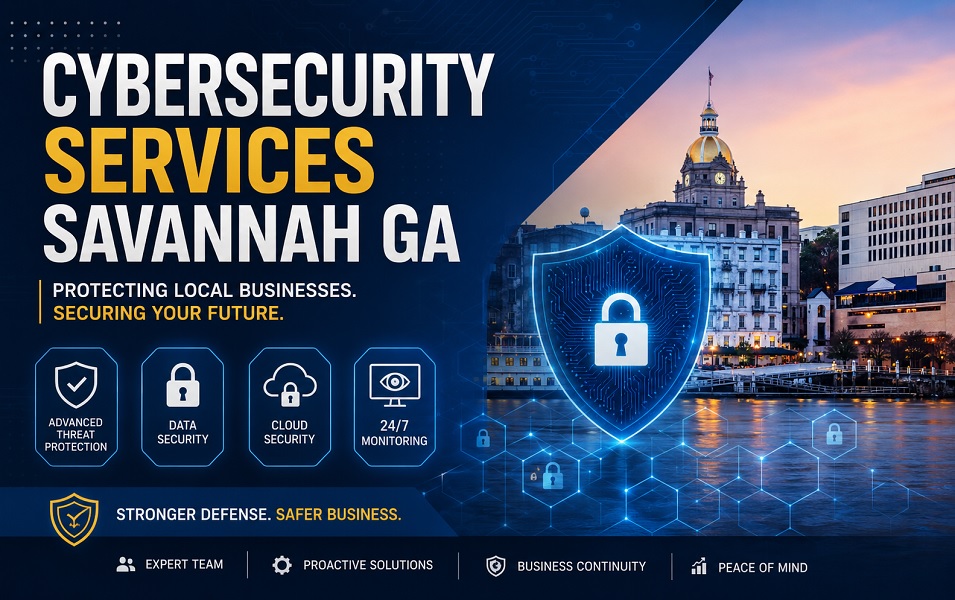
Cybersecurity Services Savannah GA: Protecting Local Businesses Today
Why Managed Security Matters for Local Businesses
Small and mid-sized companies across Coastal Georgia are prime targets for cyberattacks, yet many still lack a formal security strategy. Cybersecurity Services Savannah GA is no longer optional add-ons; they are the backbone of daily business continuity for firms that rely on digital systems to serve customers. From law offices in the Historic District to logistics firms near the Port of Savannah, every organization holds data that attackers want. Without dedicated protection, a single breach can halt operations, damage client trust, and trigger costly recovery efforts.
Business owners often assume they are too small to be noticed by hackers, but this misconception leaves many companies dangerously exposed. Attackers frequently use automated scanning tools that target any vulnerable system regardless of company size. Local businesses that operate lean IT teams or none at all face the highest risk because they lack dedicated staff to monitor threats continuously. Partnering with a managed provider closes this gap and gives leadership the confidence to focus on growth instead of worrying about the next attack.
Understanding Today’s Cyber Threat Landscape
Cybercriminals no longer target only large corporations; small businesses in Savannah, Pooler, Richmond Hill, and the broader Lowcountry face daily phishing attempts, ransomware campaigns, and social engineering scams. Attackers know that smaller companies often have thinner defenses, making them attractive entry points for larger supply-chain breaches. Local businesses connected to tourism, healthcare, legal services, and logistics are especially vulnerable because they store sensitive client and financial information. Understanding this shifting threat landscape is the first step toward building a resilient defense strategy.
Threat actors increasingly rely on automated tools that scan networks around the clock, searching for outdated software, weak passwords, and unpatched vulnerabilities. A single unprotected endpoint can become the doorway for a full network compromise within hours. Coastal Georgia businesses that operate remote teams or hybrid offices face additional exposure through unsecured home networks and personal devices. Recognizing these risks early allows companies to prioritize investments in monitoring, patching, and access control before an incident occurs.
Proactive IT Management as the Foundation of Security
Reactive IT support, where problems are only addressed after they cause downtime, leaves dangerous gaps that attackers can exploit. Proactive management flips this model by continuously monitoring servers, workstations, and network devices to catch issues before they escalate into security incidents. Regular patch management closes vulnerabilities that hackers frequently exploit within days of public disclosure. Businesses that adopt a proactive posture experience fewer outages and significantly reduce their exposure to preventable breaches.
A well-managed IT environment includes documented asset inventories, standardized configurations, and scheduled maintenance windows that keep systems current without disrupting daily operations. Proactive teams also track warranty status and lifecycle planning, replacing aging hardware before it becomes a liability. This structured approach gives leadership visibility into technology spending and risk exposure across the organization. For growing companies in Savannah, this consistency translates directly into fewer emergencies and more predictable budgeting.
Managed Detection and Rapid Incident Response
Continuous monitoring tools track network traffic, login behavior, and system logs around the clock, flagging anomalies that could indicate a breach in progress. This kind of always-on protection is exactly why businesses invest in Cybersecurity Services Savannah GA rather than relying on occasional check-ups. Speed matters enormously in this field; the difference between detecting an intrusion in minutes versus days often determines whether a company loses a few files or its entire database. Local businesses benefit from having a dedicated response team ready at any hour.
When an incident does occur, a documented response plan reduces chaos and shortens recovery time. Skilled responders isolate affected systems, contain the threat, and begin restoring clean backups while preserving evidence for further investigation. Clear communication protocols also ensure that employees, customers, and, when necessary, regulators are informed appropriately. Companies without a response plan often face longer outages and greater financial losses simply because no one knew the correct first steps to take.
Protecting Business Data with Backup Solutions
Ransomware attacks frequently target backup systems first, knowing that companies without reliable copies of their data are far more likely to pay a ransom. Modern backup strategies use encrypted, offsite, and immutable storage so that even if primary systems are compromised, clean data remains recoverable. Automated daily backups paired with periodic recovery testing ensure that files actually restore correctly when needed, not just that they exist. This layered approach protects against hardware failure, human error, and malicious attacks alike.
Disaster recovery planning goes beyond simple file backup by mapping out how quickly critical systems must return to service after an outage. Recovery time objectives and recovery point objectives help businesses understand acceptable downtime and data loss thresholds for each department. Savannah businesses operating near the coast also must account for hurricane season, when power outages and physical damage can compound digital risks. A tested recovery plan keeps operations running even when the unexpected strikes.
Securing Microsoft 365 and Cloud Environments
Most small and medium businesses now depend on cloud platforms like Microsoft 365 for email, file storage, and collaboration, making these environments a top target for attackers. Multi-factor authentication, conditional access policies, and mailbox monitoring significantly reduce the risk of account takeover and business email compromise. Misconfigured sharing settings are one of the most common causes of accidental data exposure in cloud environments. Proper configuration review ensures sensitive files are not left publicly accessible.
Cloud security also involves managing user permissions carefully as employees join, change roles, or leave the company. Automated offboarding processes revoke access immediately, closing a common gap that attackers exploit through former employee credentials. Regular audits of connected applications and third-party integrations catch unauthorized tools before they can siphon company data. For growing businesses, disciplined cloud governance keeps productivity high without sacrificing security.
Network Security and Server Protection for Growing Companies
A secure network begins with properly configured firewalls, segmented traffic, and encrypted connections between offices and remote workers. As companies scale, unmanaged network sprawl often introduces shadow devices and forgotten access points that create unnecessary risk. Regular vulnerability scanning identifies these gaps before attackers find them, allowing IT teams to remediate issues proactively. Strong network hygiene forms the perimeter that protects everything running behind it.
Servers hosting business applications and databases require dedicated attention, including hardened configurations, restricted administrative access, and consistent patching schedules. Virtualized environments add efficiency but also introduce complexity that must be managed carefully to avoid misconfiguration. Businesses expanding into new locations or adding remote staff need network architecture that scales securely rather than growing haphazardly. A well-planned infrastructure supports both current operations and future growth without compromising protection.
Meeting Regulatory Compliance Requirements
Many industries, including healthcare, finance, and legal services, face strict data protection regulations that require documented security controls and regular audits. Businesses that invest in Cybersecurity Services Savannah GA gain a partner who can map existing practices against frameworks like HIPAA, PCI DSS, or general data protection best practices. Falling short of compliance requirements can result in significant fines, contract losses, or reputational damage that outlasts any single incident. Working with knowledgeable IT partners simplifies this often confusing regulatory landscape.
Compliance is not a one-time checklist but an ongoing process that evolves alongside changing regulations and business operations. Regular risk assessments, policy updates, and staff training keep organizations aligned with current requirements throughout the year. Detailed documentation also proves valuable during insurance renewals, as many cyber insurance providers now require evidence of specific security controls before issuing coverage. Coastal Georgia businesses that prioritize compliance position themselves as trustworthy partners to clients and vendors alike.
Employee Training and the Human Side of Security
Technology alone cannot stop every threat; employees remain both the first line of defense and, unfortunately, a common point of failure in security incidents. Phishing simulations and regular training sessions teach staff to recognize suspicious emails, fraudulent requests, and social engineering tactics before they cause harm. Companies that invest in ongoing education see measurably fewer successful phishing attempts over time. Building a security-conscious culture takes consistent reinforcement rather than a single annual seminar.
Clear policies around password management, device usage, and data handling give employees practical guidance for everyday decisions. Encouraging staff to report suspicious activity without fear of blame speeds up detection and limits damage when mistakes happen. Leadership involvement also matters, since employees take security more seriously when executives visibly prioritize it. A well-trained workforce becomes an active asset in protecting company systems rather than a hidden liability.
Choosing the Right Technology Partner for Your Business
Selecting the right technology partner requires more than comparing price lists; businesses should evaluate response times, industry experience, and the breadth of services offered. A reliable provider combines proactive monitoring, rapid incident response, and clear communication tailored to how local businesses actually operate. Asking potential partners about their experience with similar-sized companies in Coastal Georgia reveals whether they understand regional business needs. A strong partnership feels collaborative rather than purely transactional.
Long-term value comes from providers who treat technology as a strategic asset rather than a recurring expense to minimize. Regular business reviews, transparent reporting, and scalable service plans allow companies to grow without outgrowing their IT support. Local presence also matters when on-site assistance becomes necessary for hardware issues or physical security concerns. Businesses throughout Savannah and the Lowcountry benefit most from partners committed to their long-term success rather than one-off fixes.